Login
Login
Shipping Country
Super CLEARANCE CAMPAIGN - Selected tools and accessories with Super Special prices! - CHECK HERE
READ MORE
Login
Short answer: A straightedge is used to straighten timber, i.e. to create a flat reference surface and a right angle. A plane, on the other hand, narrows the piece of wood to the desired thickness and makes the opposite side completely parallel to the straightened reference surface. Machines are the most important work partner in a carpentry workshop: without a straightedge, a plane will only repeat the existing curvatures in the wood, and without a plane it is difficult to get a board of exactly the same thickness.
For many woodworking beginners – and sometimes even more experienced carpenters – the world of planers can seem confusing. Shops and workshops talk about straight planers, surface planers and combinations of the two, or straight-surface planers. But what is the difference between them, and why can't you just go with one if your goal is perfectly straight and dimensionally accurate lumber?
In this guide, we'll walk you through the working principles of a planer and a surface planer, their key differences, and how to use these two machines together to achieve optimal results. Let's skip the unnecessary marketing jargon and get straight to the point – with a carpenter's touch and a practical approach.
A jointer is a machine whose sole and most important function is to make one side of a piece of wood perfectly straight and even. It also cuts the edge of the board at exactly 90 degrees to this straightened surface. It can be said that a jointer creates a "foundation stone" or reference surface for the piece of wood, on which all subsequent machining and measurements are based.
The machine is constructed with two long metal tables (feed table and receiving table) with the blade shaft rotating between them. The receiving table is set to exactly the same height as the highest point of the rotating blade. The feed table, on the other hand, is set slightly lower – this height difference determines how many millimeters of wood the machine can peel off at a time.
When you push a crooked board along the feed table over the blade onto the receiving table, the long tables support the board at its highest points. The blade chips away the bumps on the surface of the wood until the underside of the board is completely straight. After this, the board is pressed from its already straightened surface against the machine's side guide, or fence, and the edge of the board is planed straight. The end result is two straight and perpendicular surfaces. In a straight planer, the wood is always fed by hand and pressed against the table and fence with a steady, controlled force.
Once a straight reference surface has been created with a straightedge, a thicknesser comes into play. The thicknesser's job is not to straighten the board itself, but to make the opposite side completely parallel to the already straightened side and to narrow the board to the exact desired thickness.
A planer works in a completely different way than a straight edge planer. It has one flat, adjustable base table, above which is a rotating blade shaft and mechanical feed rollers. When you push the wood into the machine, the feed rollers grip it and automatically pull it through under the rotating blade.
The straightened reference surface of the board is always placed face down against the planer table. Since the blade axis is exactly parallel to the lower guide table, the blade cutting from above makes the top surface of the board perfectly parallel to the bottom surface. You simply adjust the table height upwards with each pass until the board has reached its exact target thickness with an accuracy of a fraction of a millimeter. When using a planer, you do not need to (and should not) press the wood against the blade by hand, as the machine does the pulling and pressing for you.
Although both machines remove wood with rotating blades, their purpose, operating logic and design are completely different. A common mistake is to think that a planer can do the same job as a straight edger. If you put a banana-shaped plank directly into the planer, the feed rollers will force the warping to straighten out during the planing process. When the plank comes out of the machine, the internal stresses in the wood will return it to its original warped shape – the end result is just a slightly thinner banana-shaped plank.
Here is a clear comparison table of the differences between the machines to make it easier to understand:
| Feature | Surface planing machine | Planer |
|---|---|---|
| Primary task | Straighten a crooked or convex wooden surface and create a 90 degree angle on the edge. | Make the opposite surface parallel and calibrate the board to the exact thickness. |
| Blade location | Below (between the tables). The wood is pushed over the blade. | Above. The wood passes under the blade. |
| Input method | Manually entered. The user controls and presses the piece. | Automatic roll feed. The machine pulls the wood independently. |
| Reference surface | No previous reference surface required. The machine creates it itself. | Always requires a pre-aligned and straight surface underneath. |
| Safety | Requires great care and protection (e.g. push handles) as the rotating blade is more exposed. | The blade is completely enclosed inside the machine body, making it safer for the user. |
The secret to high-quality, straight joinery lies in the seamless cooperation of these two devices. In order to turn a raw plank into a perfectly straight and dimensionally accurate component for, for example, a table top or a furniture frame, the work steps always proceed in the same, logical order:
Important tip for keeping your workspace clean: Both planers produce a huge amount of wood chips and fine dust in seconds. If the chips are left to spin on the planer table or roller, they will press into the surface of the wood, making unsightly indentations (so-called chip marks). Therefore, efficient and high-quality dust extractors are an absolute prerequisite for smooth and clean planing work. The extractor also keeps the air clean to breathe and effectively prevents the machines from clogging.
In many hobby and small workshops, space and budget are at stake. Placing two large, separate machines in the workshop can be an impossible task. The solution to this is a straight-edge planer, or combination machine, which, as the name suggests, combines both functions in the same frame.
In a combination machine, planing is done on the tables on top of the machine, while for planing , the wood is fed into the machine through the lower table. The same rotating blade shaft does both jobs.
The choice depends entirely on the type of wood you are using and how much space you have available. If your budget or space allows for only one unit, here are a few practical rules of thumb to help you make your choice:
1. Get a planer if...
You will mainly use pre-straightened, planed or finely sawn timber that you buy from lumber stores. With a planer, you can easily calibrate the finished boards to just the right thickness and clean their surfaces before finishing or gluing. It is an excellent choice for many instrument makers or small object makers, for example, who receive their raw materials as straight blanks.
2. Get a straight-edge combination machine if...
You work a lot with raw boards, planks or recycled wood. If you make furniture such as tables, chairs or cabinets from scratch from sawn wood yourself, you definitely need both functions. Without a straight edge planer you can't make crooked wood straight, and without a planer you can't make it even. A combination machine is the most sensible and popular solution for most Finnish carpenters and active hobbyists.
How do other workshop machines complement planing?
Planing does not take place in a vacuum, but is part of a wider processing chain. For example, high-quality band saws are indispensable when you want to split a thick plank into two thinner parts before planing – this saves valuable wood material instead of having it planed into shreds in a vacuum cleaner.
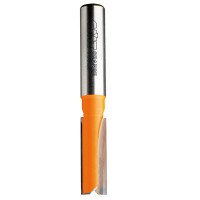
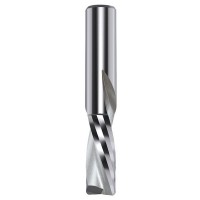
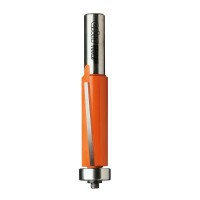
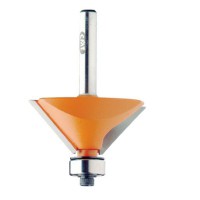
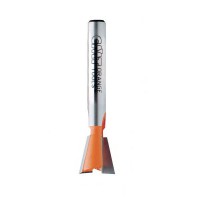
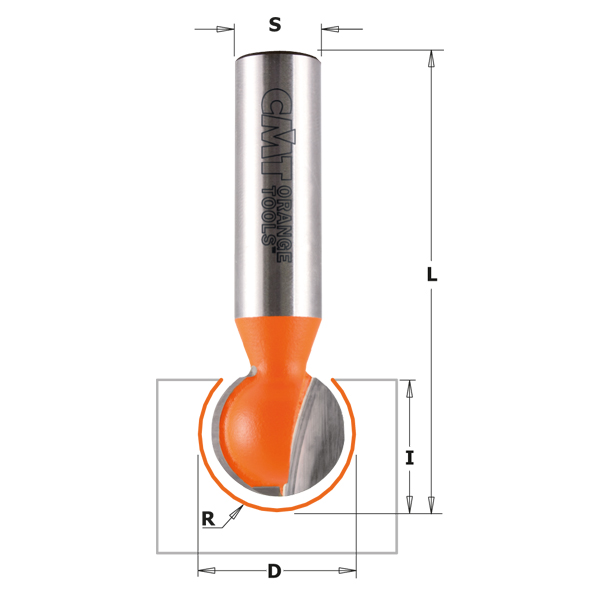
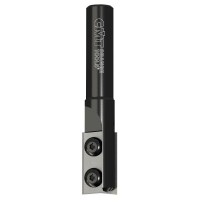
When the wood has been planed to a perfectly straight and even thickness, further processing is much easier and more precise. Whether it's making fine joints with a router – where sharp, high-quality router bits produce a perfectly clean cut – or precise sanding and finishing, the quality of the work rises to a whole new level when the groundwork has been done correctly by planing. For example, in finishing and precise craftsmanship, machines from the Festool product family offer the best precision that a flat planed wooden surface deserves.
Machine planing requires a bit of learning at first and understanding the machine settings, but once you experience the feeling of a crooked and grey plank turning into a perfectly straight, smooth and dimensionally accurate carpentry raw material in seconds, there is no going back to relying solely on hand planers or sanders. Feel free to ask us more about planers and chip removal equipment – ??we will help you equip your workshop in such a way that working puts a smile on your face!
100% Trustworthy online store with history
Expert customer service
Fast deliveries
Large selection directly from stock
No middlemen - save on the price






 Suomeksi
 På Svenska