Login
Login
Shipping Country
Super CLEARANCE CAMPAIGN - Selected tools and accessories with Super Special prices! - CHECK HERE
READ MORE
Login
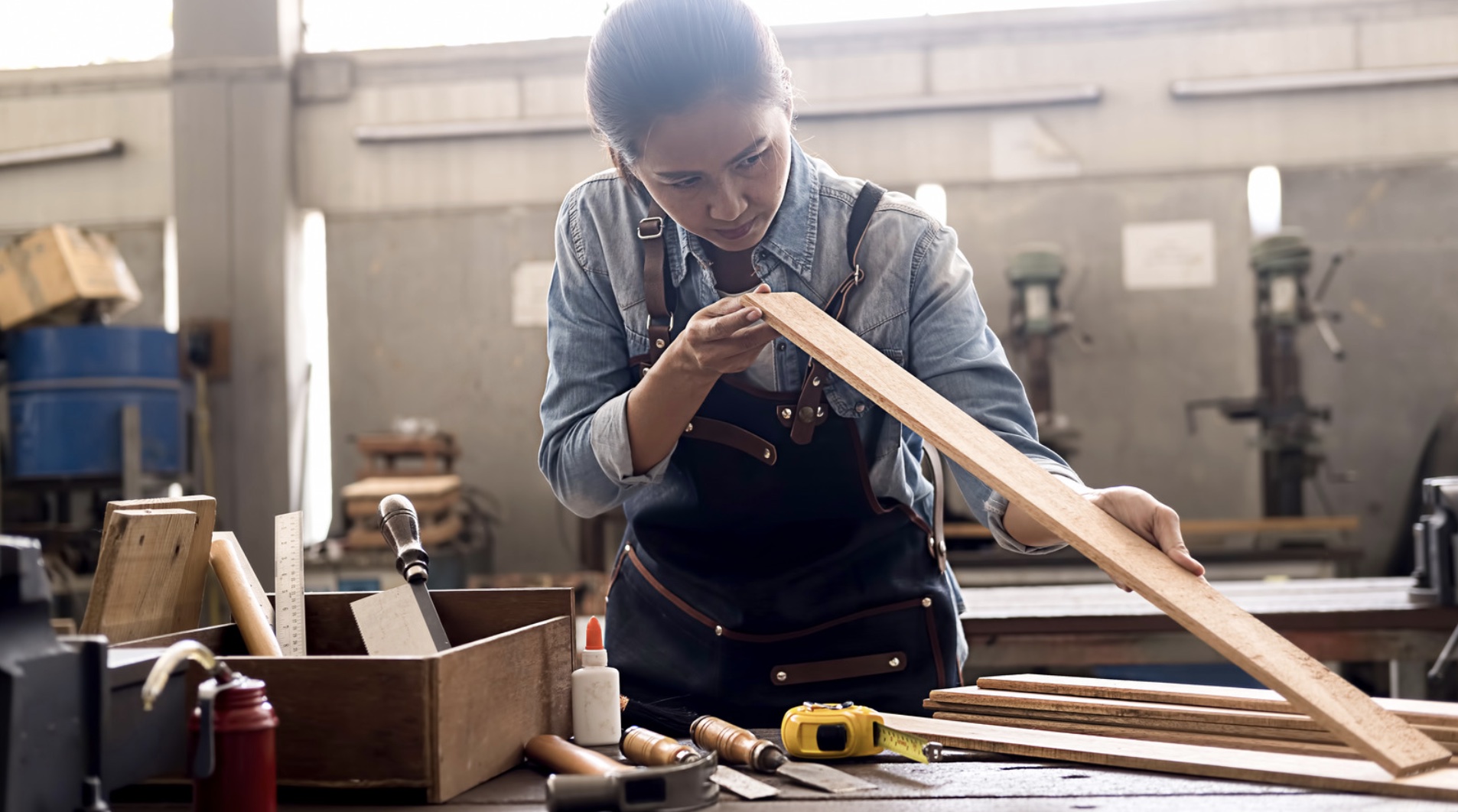
“The old masters really did know their business in past centuries when it came to the craft of the cabinetmaker. The literature published on the subject is genuinely worth reading. But to the point.
If you want to dry air-dried wood (15 per cent) correctly to cabinet-dry (about 8 per cent), take the quantity you need into a centrally heated space at +18–20 °C, stacked with air around it, for three months. See that it is ventilated — there is no point putting it under the bed. After three months at the earliest the result should be cabinet-dry wood.
What follows is a description of measuring the moisture. If this text raises unpleasant feelings, or if you feel unsure about doing such a thing, there are digital contact meters in the shops. Of their price and accuracy I have no idea. With the cheap ones you probably achieve nothing, and the expensive ones cost more than most people's monthly pay.
Test the result with accurate scales, an oven thermometer and an oven. The aim is to remove the moisture from a test piece. By comparing the starting weight with the weight after it has been dried out completely in the oven, you get the difference, that is the weight of the moisture that has evaporated, and the rest is mathematics.
Saw off a piece of the wood, perhaps 15–20 cm depending on the thickness. The greater the volume, the more accurate the result. Measure it carefully and weigh it. Note the readings to one or two decimal places. Put the piece into a hot oven, say +100 °C — the aim is to remove only water vapour and nothing else — and leave it for a while, 20–30 minutes. The estimate of time and the temperature are by feel. Weigh it. Write the reading down. Put the piece back in the oven. Carry on until two consecutive measurements give the same low result. The process will surely take over an hour, or thereabouts. Finally a little more arithmetic and you have the moisture percentage.
Fruit woods, apple at least, are very prone to twisting, so the longer the time in air drying the better. In my case apple and pear trunks have been left to dry in the woodshed for 15 to 25 years. It is worth remembering that wood splits at the ends as it dries — all species do — so the yield of prime timber from fruit wood is nowhere near 100 per cent but perhaps only 50–60 per cent or less, depending on the length of the log.
Two simplified examples. One: you want to make something from birch and get hold of a half-metre log. You think you will get something 50 cm long out of it. In reality, if you want no end splits anywhere in it, you will get only 10 cm of prime timber, because it is worth sawing 20 cm off each end. Two: let us pretend you want good dry apple wood 500 mm long, for making a jewellery box for instance. Then you should saw a log of over 1,200 mm and pray there are no micro-cracks — not forgetting the slow air drying that has to be done first.
As for the final dryness of the wood, that figure (the percentage) is in a sense not the essential thing. What matters is that once the wood has dried to the same level as a centrally heated house, the material can no longer change shape after machining — it has dried to the right moisture content. Whether that is 8 or 10 per cent makes no difference, as long as it matches the prevailing humidity of an inhabited house. You will of course not reach the 6 per cent of kiln drying, but for the material a slow and gentle drying is far better than two weeks in a kiln.”
The text is quoted with the permission of Esko Lehtovaara, from the Puusepät group on Facebook. Esko Lehtovaara holds restoration training approved by the Finnish Heritage Agency, has been in the field for 30 years and speaks for healthy building. He founded the company Tiny-e – Restaurointipalvelut in 2012. Tiny-e carries out all kinds of timber repairs in old houses, whether caused by microbes or by something else. Tiny-e gives and carries out repair advice, paint surveys and condition inspections of old buildings.
At least three months, stacked with air around it in a centrally heated space at +18–20 °C. Ventilation has to be seen to.
Saw a test piece 15–20 cm long, weigh it on accurate scales, dry it in an oven at +100 °C in 20–30 minute stages and weigh it in between until two consecutive results are the same. The share of evaporated moisture is calculated from the difference in weight.
The figure itself is not the essential thing. What matters is that the wood has dried to the same level as the air in an inhabited, centrally heated house — then it no longer changes shape after machining.
Wood splits at the ends as it dries, so the yield from fruit wood is often only 50–60 per cent or less. It is worth sawing about 20 cm off each end.
For the material, yes. Slow, gentle drying is far better than two weeks in a kiln, even though the 6 per cent of kiln drying is not reached.
100% Trustworthy online store with history
Expert customer service
Fast deliveries
Large selection directly from stock
No middlemen - save on the price






 Suomeksi
 På Svenska