Login
Login
Shipping Country
Super CLEARANCE CAMPAIGN - Selected tools and accessories with Super Special prices! - CHECK HERE
READ MORE
Login
A router is one of the most versatile tools in the workshop, but most of the time its use is strictly based on guides, stops or templates. The idea of ??controlling a router completely freehand can be intimidating – and with good reason. With a motor running at over 20,000 rpm, even the slightest slip can ruin a workpiece in an instant or cause a dangerous kickback.
However, freehand machining is possible as long as you master the laws of physics and understand the forces of the machine. It opens up new possibilities for things like sign engraving, artistic design, and freeform patterns. Success requires understanding how the blade meets the wood grain and how the machine's own rotational motion is utilized to achieve stability without mechanical guide rails.
The answer is yes, but it requires the right working methods and a steady grip. Typically, controlled wood routing without a side fence or guide rail is limited to certain special situations. These include engraving nameplates, inlaying free-form designs, or template work using a ball-bearing-equipped blade.
The challenge of freehand work is explained by the laws of physics and force relationships. The electric motor produces a high torque, and the router blade rotates at high speed. When the cutting blade hits the wood grain, it naturally tends to drive the entire machine in the direction of its rotation. If you try to force the router to go straight using only hand power without support, the device will easily start to wander and tear the wood uncontrollably. It makes sense to respect the machine, as unnecessary tension only stiffens the grip and weakens control.
The high rotational speed, or RPM, causes the cutting edges to strike the wood thousands of times per second. This speed helps to create a clean surface and prevents the wood from splitting, but at the same time, the forces between the blade and the material are immediately transferred to the operator's hands. If the blade encounters a knot or the direction of the grain changes suddenly, the machine will tend to run out of direction. This is why the grip must be sufficiently stable.
The most important factor in safe machining is controlling the feed direction. In woodworking, there are two different ways to feed the blade relative to its direction of rotation: up-cut and down-cut . When working freehand, the difference between these methods determines whether the performance is controlled or whether dangerous kickback occurs.
In up-milling, the machine is fed so that the cutting edge of the blade strikes the wood grain against the feed motion. This creates a natural resistance that presses the router evenly against the workpiece and allows you to lean on this force in a controlled manner. The movement is easily predictable, and the machining result remains even, as the tool does not try to rush forward.
In down-cut milling, the machine moves in the same direction as the blade rotates. When working freehand, the cutting blade grabs the wood and pulls the machine forward at high speed. Since there is no resisting force, the router is prone to slipping out of your hands. This increases the risk of losing control of the tool and damaging the machine.
When no controls or stops are used, the body and arms are the only support system for the router. Ergonomics and proper posture are important. The working position should be stable, with feet well apart and a low center of gravity. Never reach or work in a position where you could easily lose your balance if the machine makes a sudden jerk.
A two-handed grip is essential for all freehand work. Hold both handles of the router firmly, but don't squeeze so hard that your hands tire quickly or start to shake. The power should come from your forearms and body weight transfer, not just your wrists. This makes the movement smooth and easy to control.
Experienced carpenters often use their fingers as sliding stops or anchors. When guiding a router near the edge of a workpiece, you can place the fingers of your other hand (such as the thumb or the back of your hand) lightly against the surface or edge of the workpiece while holding the base plate or handle of the machine. This contact creates additional mechanical support and provides tactile feedback about the machine's path. This makes it easy to correct even small deviations from the path before they become errors.
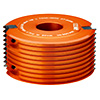
In the absence of mechanical guides, the geometry and design of the selected blade largely determine how safe and stable the work is. Not all router bits are suitable for freehand shaping. For example, large profile bits that remove a large amount of wood at a time create such strong torques that it is practically impossible and dangerous to control them without stops.
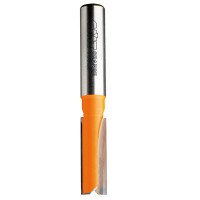
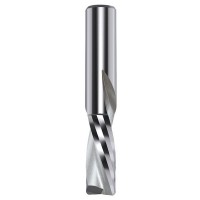
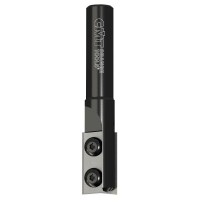
The safest choice for free-form shaping is a chip-limitation design. In these blades, the body behind the cutting edge is shaped to prevent the blade from biting too much wood at once. In practice, this limits the maximum thickness of the chip. If the blade cannot bite too deeply into the material, the risk of kickback is significantly reduced and the machine remains stable in its direction of travel even when you make small steering movements.
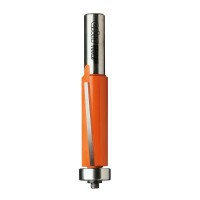
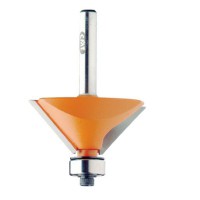
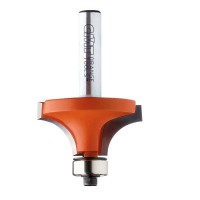
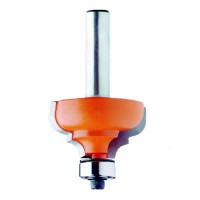
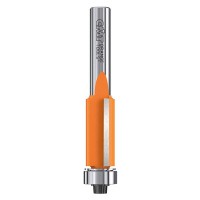
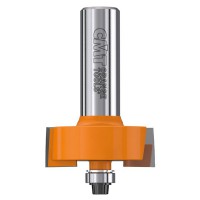
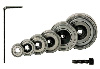
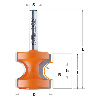
The diameter of the blade also plays a big role. Smaller diameter blades produce significantly less resistance and lateral force on the wrists. If you are working on patterns or doing template milling, ball bearing blades are an excellent help. The bearing acts as a mechanical stop and a sliding surface against the edge of the template, preventing the blade from running over the intended line, even if the control is based solely on hand forces.
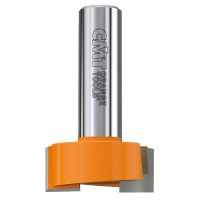
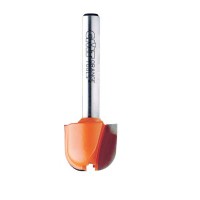
In the online workshop's selection you will find high-quality router bits that make wood routing precise and controlled. Discover professional-level blades in our online store!
Discover the milling cutter hereOne of the biggest challenges when working without mechanical guide rails is maintaining a consistent feed rate. When using freehand control, the hand naturally slows down in difficult areas, such as tight bends or when the eye is focused on a precisely drawn line. This slowdown immediately impairs the machining result.
When the cutting blade rotates at high speed and the machine's forward motion slows down or stops, the blade starts to rub against the wood instead of cutting. This creates intense frictional heat between the material and the blade. Dense and hard wood species, such as oak or birch, are particularly susceptible to charring, causing unsightly burn marks. Wood tearing occurs when the blade meets the wood grain at an unfavorable angle and the feed rate is too high or uneven in relation to the spindle speed.
The solution to these problems is dynamic adjustment of the spindle speed (RPM) and a continuous, smooth motion. If you have to move slowly freehand, reduce the router speed. This will reduce frictional heat generation and prevent surface charring. Always try to keep the motion at a steady, calm pace – it is recommended to move a little faster and make several light passes rather than moving slowly through a deep groove.
Using a freehand router requires practice, but it is entirely possible as long as you understand the direction of the forces and provide proper support. When you master the principles of up-milling, use your body as support, and choose the right, kickback-resistant blades for the job, you will be able to work on precise details and shapes safely. Start slowly, practice on scrap pieces, and let the machine do the cutting work without unnecessary force.
100% Trustworthy online store with history
Expert customer service
Fast deliveries
Large selection directly from stock
No middlemen - save on the price






 Suomeksi
 På Svenska