Login
Login
Shipping Country
Super CLEARANCE CAMPAIGN - Selected tools and accessories with Super Special prices! - CHECK HERE
READ MORE
Login
Adjusting a band saw may seem difficult, even though it is a matter of pure physics and mechanics. One of the most common mistakes made in the workshop is leaving the band saw blade far too loose. Fear of breaking the blade or warping the machine frame causes many to tighten the blade only carefully. This tension is actually far from optimal. The end result is a meandering saw mark, burnt wood and unnecessary slowdown in work.
It is possible to adjust the blade tension correctly without expensive tensiometers or other special measuring devices. You can use your fingers and ears to work. Once you have the basics down, adjusting it becomes a routine that ensures precise machining results with every sawing pass.
When a saw starts to pull at an angle, the first reaction is often to fine-tune the blade guides or suspect a dull blade. However, guides are only intended to provide lateral support during sudden load spikes. They cannot force a loose blade to run straight if the basic settings are off.
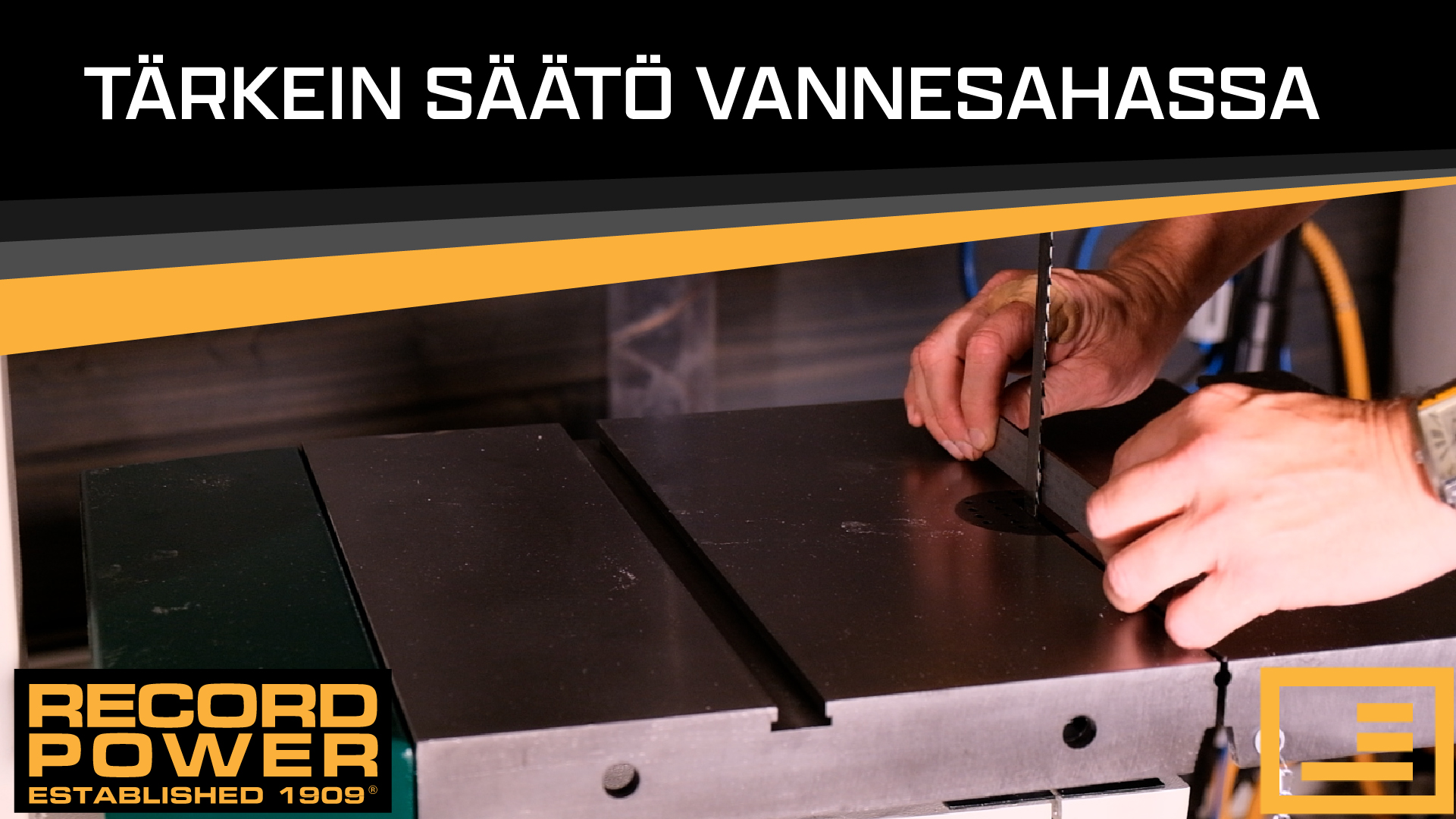
If the frame of the band saw cannot maintain sufficient tension, the stability of the blade will be lost as soon as the wood exerts resistance. When a piece of wood is pressed against the blade, the blade always seeks the easiest path. Since wood is of different strengths at different points and its grain varies, a blade that is too loose will bend and twist easily according to the grain. Guides will not save the situation, they will only wear out and heat up unnecessarily. Straight sawing requires the frame to be able to maintain sufficient tension as the resistance increases, so that the blade remains stable even before it touches the wood.
A quality band saw blade is made of tough carbon steel or bimetal, and can withstand significantly more pull than is commonly believed. Fear of the blade breaking when tightening is almost always unfounded. The blade typically breaks due to fatigue fracture or a poor connection, not because it is tightened by hand on a regular machine without any tools.
Blade manufacturers generally recommend a tension of around 15,000–20,000 PSI for carbon steel. In practice, the steel is subjected to hundreds of pounds of tensile force to ensure that it operates stably and does not give in to the resistance of the wood. The tension scales of typical hobby-grade band saws are often designed to be too conservative. A blade adjusted only according to the machine's own scale often remains too loose for actual needs.
When a special gauge is not available, two tried and tested methods can be used to determine tension: the deflection test and the ringing test. These methods give an accurate picture of the actual tension in the blade, as long as they are done correctly.
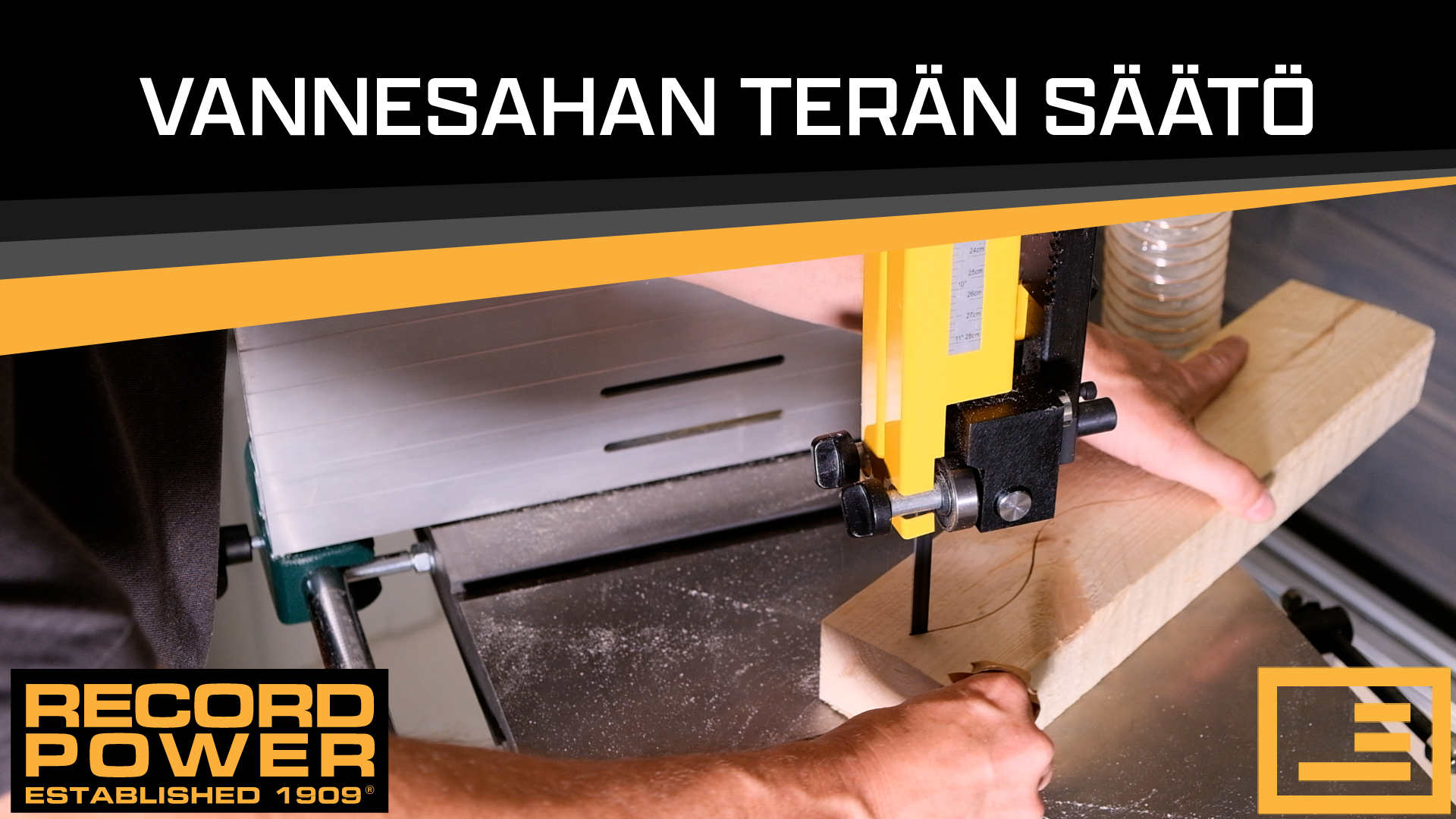
The deflection test, or thumb test, is based on the lateral flexure of the blade. Raise the upper guide of the band saw to its upper position so that the free length of the blade between the guides is as large as possible. Press the blade lightly with your finger from side to side about halfway between the guides. A properly tensioned blade should deflect laterally no more than about 6 millimeters (1/4 inch) with moderate thumb pressure. If the blade easily flexes more than a centimeter, it is too loose and will bend when cutting.
The pitch test uses sound: the tighter the blade, the higher it will sound. Make sure the controls are adjusted away from the blade, and pluck the blade with your finger like a guitar string. A loose blade will produce a low, vibrating sound. A blade that is adjusted to the correct tension will produce a bright, clear, and even 'ping' sound that fades quickly. The sound should resemble a pure bass note. If the sound is dull or grating, the tension should be increased considerably.
If you need a more accurate approach than fingertip and ear-based assessment without the need for specialized tools, the dynamic flutter test is the solution. This method is a preferred method by many experienced carpenters and accurately indicates the point where the blade tension and centrifugal force reach equilibrium. Since the test is performed while the machine is running, special care must be taken during the test.
Start by adjusting the upper and lower guides and the rear support bearings completely away from the blade so that they do not restrict the movement of the blade. First, tighten the blade as normal and start the saw. Next, slowly loosen the tension one turn at a time, while watching the blade closely. At some point, the blade will start to vibrate unsteadily and will start to swing clearly from side to side. Then slowly tighten the blade back. Tighten to just the point where the vibration stops and the blade runs perfectly straight again. Once the balance point of stability has been found, tighten the tension screw an additional quarter turn (1/4) to provide the necessary margin of safety.
Resawing , or sawing a plank into thinner slices, requires extreme stability from the bandsaw and its blade. To keep the saw line precise and prevent the blade from wandering along the grain of the wood, a wide, sparsely toothed blade is typically used. The wide steel frame acts as a guide rail inside the wood, preventing the blade from turning or twisting.
The wider and thicker the blade, the larger its cross-sectional area. Since tensile stress is calculated as a force per unit area, a wider blade requires significantly more tensile stress to achieve the same level of tension than a narrower jigsaw blade. For example, a 19 mm wide riving blade requires many times more clamping force from the machine frame and tension spring than a 6 mm wide blade. If a blade that is too wide is installed in a small hobby saw, the machine frame may bend or the tension spring may collapse before the required tensile stress is achieved. A loose blade, on the other hand, will inevitably produce an uneven cut. Always choose the width of the riving blade according to the actual clamping and frame capacity of the machine.
It is recommended to make it a routine to loosen the blade tension at the end of the workday. This will significantly extend the life of both the blade and the band saw . Continuous tensile stress of hundreds of kilograms wears out the machine's components unnecessarily when the machine is left idle overnight or over the weekend.
Continuous tension exposes the blade to metal fatigue, causing the steel to gradually lose its elasticity and break more easily. Even more sensitive to continuous pressure are the coatings on the drive wheels of a band saw. The urethane or rubber coatings on the wheels are subjected to severe compression at the point where the blade rests. If tension is left on for a long time, permanent indentations, or memory marks, are created in the soft material. The next time the saw is started, these flat spots on the wheels cause disturbing vibrations that are transferred directly to the sawing result and reduce machining accuracy. Releasing the tension also saves the shaft bearings from excessive stress.
Adjusting the tension of a band saw blade correctly takes some getting used to at first, but with the help of finger feel, sound and a flutter test, the correct tension can be found quickly without expensive tools. When you ensure that the blade is sufficiently tensioned during work and remember to loosen it at the end of the work day, your band saw will work reliably and produce a clean result year after year. Straight and effortless sawing makes workshop work much smoother.
TPI (teeth per inch) determines the speed and cleanliness of the cut. A coarse tooth pitch (2–4 TPI) suits ripping thick timber, because the large gullets clear the sawdust quickly and do not clog the kerf. A fine pitch (6–14 TPI) leaves a very clean cut in thin material and on curves, but the cut would progress too slowly or run too hot in thick solid wood.
Set means bending the teeth of the blade alternately left and right, so that the blade cuts a kerf wider than its own body. That stops the body of the blade pinching and overheating inside the wood. If the set wears unevenly, or goes blunt on one side only, the blade starts to lead — that is, to drift to one side even on a straight line.
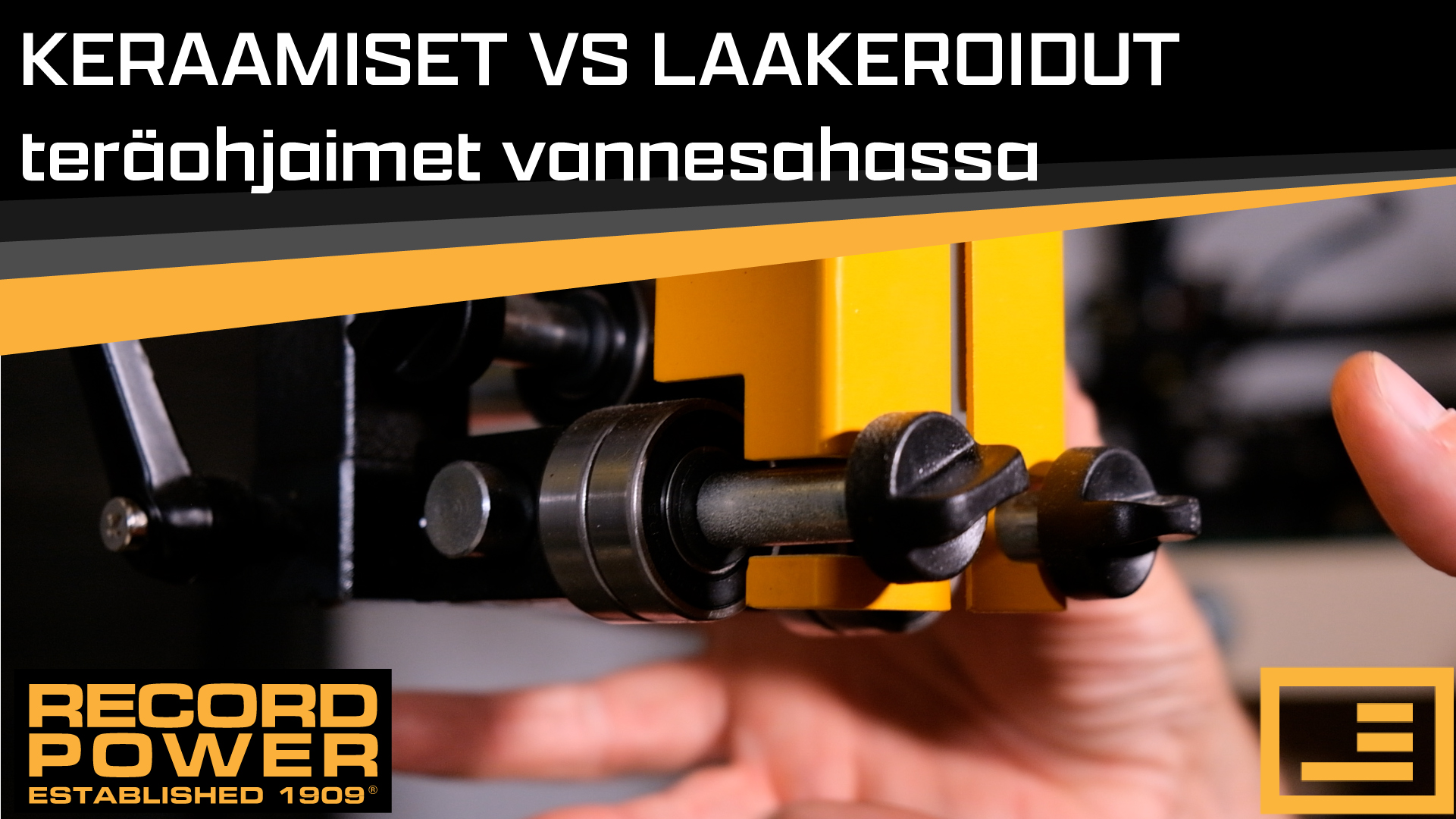
Ball-bearing guides turn with the blade and reduce friction, and they suit general use. Ceramic guide blocks instead support the blade over a larger area with no moving parts, withstand very high temperatures and give exceptionally good lateral support, especially in demanding ripping, which improves the accuracy of the cut.
The tracking adjustment determines where on the wheel the blade runs. On crowned wheels the teeth and the body of the blade should run in the middle of the crown. On flat or rubber-covered wheels the blade is often set so that the teeth come slightly over the front edge of the wheel, so the set of the teeth is not pressed into the rubber and damaged.
100% Trustworthy online store with history
Expert customer service
Fast deliveries
Large selection directly from stock
No middlemen - save on the price






 Suomeksi
 På Svenska