Login
Login
Shipping Country
Super CLEARANCE CAMPAIGN - Selected tools and accessories with Super Special prices! - CHECK HERE
READ MORE
Login
Woodworking requires precision, and the quality of the tools directly affects the final result. Whether it's a simple trim of the edges of a shelf or a complex furniture profile, the right router bits are key to achieving a finished result.
At Nettiverstaa, we emphasize the importance of tool quality. There are inexpensive sets of blades available on the market, but when working with demanding wood species such as oak, using cheap blades often leads to surface burn and rapid dulling. In this article, we will go through the basics of choosing the right router bit from a technical perspective, so that you achieve the best possible value for your investment.
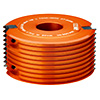
Milling cutters can be divided into main categories based on their function: for making grooves, shaping edges, or removing material from a surface.
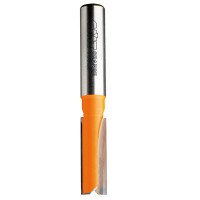
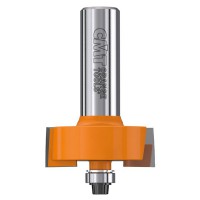
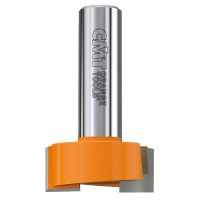
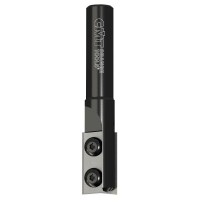
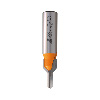
Slotting cutters are basic milling tools used to make grooves, tongues and grooves. They are available in different lengths and diameters. For example, embedding shelves into side walls requires a high-quality slotting cutter. Please note that a large diameter cutter requires more power from the machine and it is recommended to cut deep grooves in several stages.
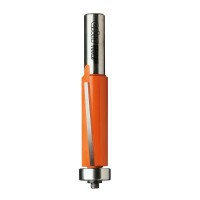
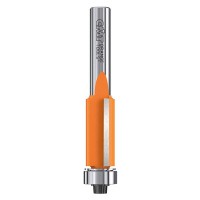
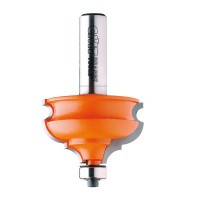
These blades have a ball bearing that follows the template or edge of the workpiece. The blade cuts the surface exactly to the plane of the template, which is essential when duplicating several identical parts using a stencil or when cleaning the edges of coatings.
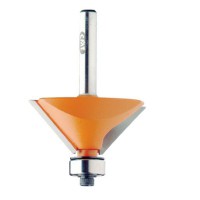
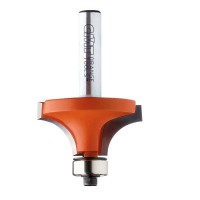
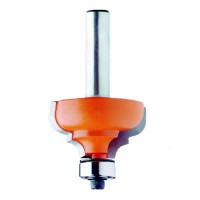
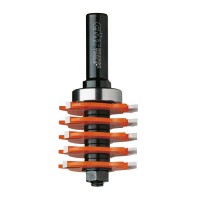
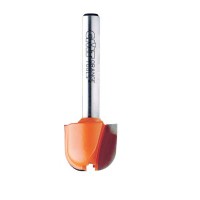
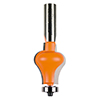
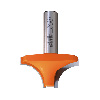
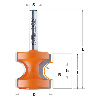
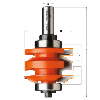
This category includes rounding blades, bevel blades and decorative profile blades. They are used for finishing furniture and moldings. Router blades with a guide bearing allow precise work even when freehand, as the bearing prevents the blade from biting too deeply into the material.
In high-quality milling cutter systems, the balancing and cutting angles of the cutters are optimized so that the milled surface is smooth and requires only minimal grinding.
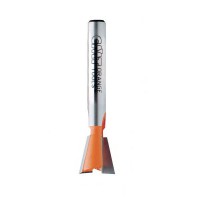
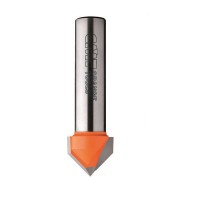
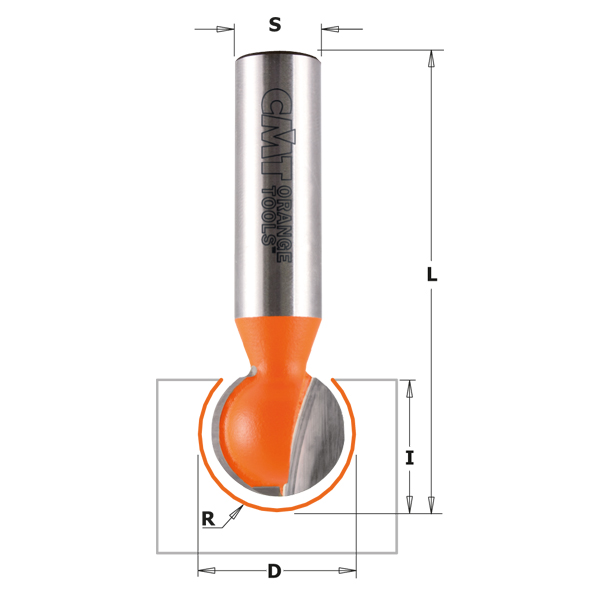
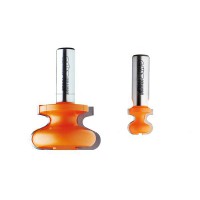
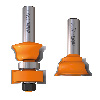
When looking at the shape of the blade, it is important to remember that the machining mark is the opposite of the blade profile in the wood. The outwardly visible shape of the blade leaves a corresponding indentation in the wood.
For example:
Understanding this principle makes it easier to choose the right blade, especially when joining two different profiles together, such as in the manufacture of mirrored doors. Precise joints require that the profiles of the mating pieces match each other perfectly.
A dull blade causes friction and burns the surface of the wood. Router bits are mainly made of high-speed steel (HSS) or carbide (HM/TCT).
HSS (High Speed ??Steel): Suitable for soft wood and occasional use. However, it dulls quickly when working with hard wood or materials containing glue.
Carbide (HM/Carbide): Our high-quality blades are equipped with carbide inserts. They last much longer than HSS blades and are more resistant to the heat generated during milling. Carbide blades are a more cost-effective choice in the long run due to their durability.
High-quality blades are always recommended for active use. A high-quality blade cuts cleanly, vibrates less and improves work safety. Nettivarstaa's selection consists of tools that have been proven to be effective in tests and professional use.
Always check the collet size of your router before purchasing a bit. The most common sizes in Europe are 8 mm and 12 mm. Smaller routers often use an 8 mm shank, while heavier machines use bits with a 12 mm shank.
The 12 mm shaft is stiffer, which reduces vibration and improves cutting performance, especially with large diameter blades. If your machine is compatible with 12 mm blades, it is recommended to use them for stability.
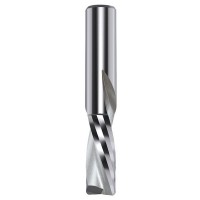
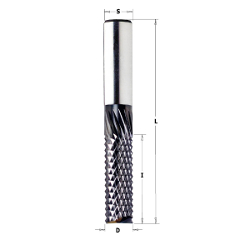
What about CNC machines ? In these machines, the requirements for the blades are emphasized due to the continuous feed. CNC machining often uses solid carbide blades (Solid Carbide), which are designed to remove chips efficiently either up-cut or down-cut to prevent tearing of the material.
The effectiveness of a blade is often reduced by accumulated resin and adhesive residue, and not necessarily by wear of the metal. The combustion residue causes additional friction, which heats up and damages the blade.
Cleaning: Use a suitable resin remover. Brush off any residue with a brass brush. Avoid using a wire brush to avoid damaging the carbide bits.
Bearings: Check the condition of the bearings on your edge milling cutters regularly. A seized bearing will immediately damage the workpiece. A small amount of bearing oil will help maintain functionality.
Storage: Store blades separately in their original packaging or in a holder. If blades come into contact with each other, microscopic cracks may form in the carbide tips, which will reduce the cutting result.
The router requires care due to the high rotation speed (typically 10,000 – 30,000 rpm).
At Nettiverstaa, we believe that quality tools are the best starting point for a successful project. By choosing milling cutters from us, you get professional-level equipment and expert support.
A quality tool is an investment in the quality of work and comfort of use. If you need help choosing a blade, our experts are happy to help.
100% Trustworthy online store with history
Expert customer service
Fast deliveries
Large selection directly from stock
No middlemen - save on the price






 Suomeksi
 På Svenska