Login
Login
Shipping Country
Super CLEARANCE CAMPAIGN - Selected tools and accessories with Super Special prices! - CHECK HERE
READ MORE
Login
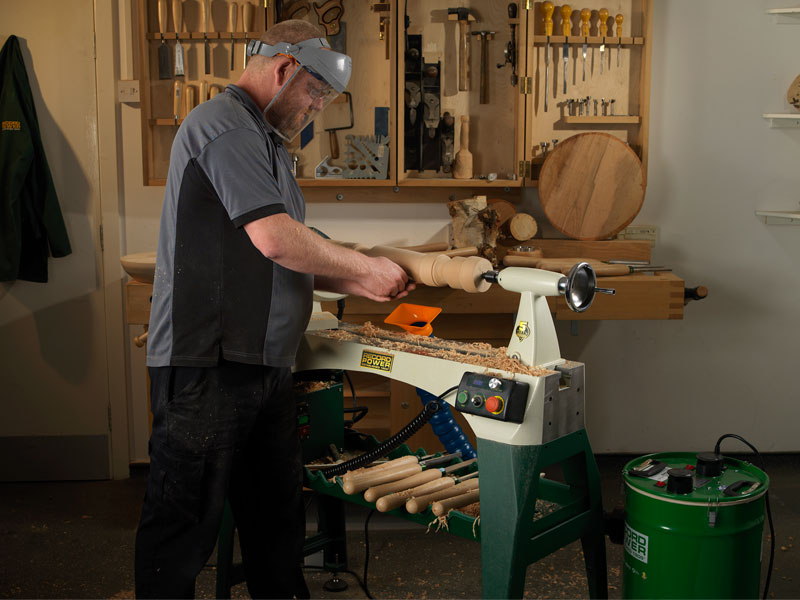
Choosing the right dust extractor is one of the most important – and most misunderstood – investments a woodworker can make. Effective dust extraction, source capture and dust control are about more than keeping the workshop tidy: the fine dust from sanding, routing, turning and sawing is invisible, stays airborne for hours, and is linked to serious long-term health risks. This guide walks through the three main strategies for dust control and gives a practical framework for matching the right extractor to your workshop, joinery shop or hobby space.
Wood dust is not just a nuisance but a well-documented health risk – and the particles that cause the most lasting damage are the fine dust particles you cannot see. The fine, invisible dust generated by sanding, routing, woodturning and sawing stays suspended in workshop air long after work has stopped.
Particles in the PM2.5 range (smaller than 2.5 microns) are identified by the US EPA, the World Health Organization and occupational health agencies as the fraction posing the greatest long-term health risk. They are small enough to bypass the body's natural defences and reach the deepest lung tissue, where clearance is very slow and exposure accumulates over years.
Wood dust is also classified as a Group 1 carcinogen by the International Agency for Research on Cancer (IARC), with the strongest evidence linking prolonged hardwood dust exposure to nasal and sinus cancers. And it is not only your health at stake – dust building up inside machines reduces performance, damages electronics and shortens the service life of your equipment.
Dust control is not one-size-fits-all. Most well-designed workshops combine three systems, each addressing a different part of the problem: source extraction, air filtration and personal protection.
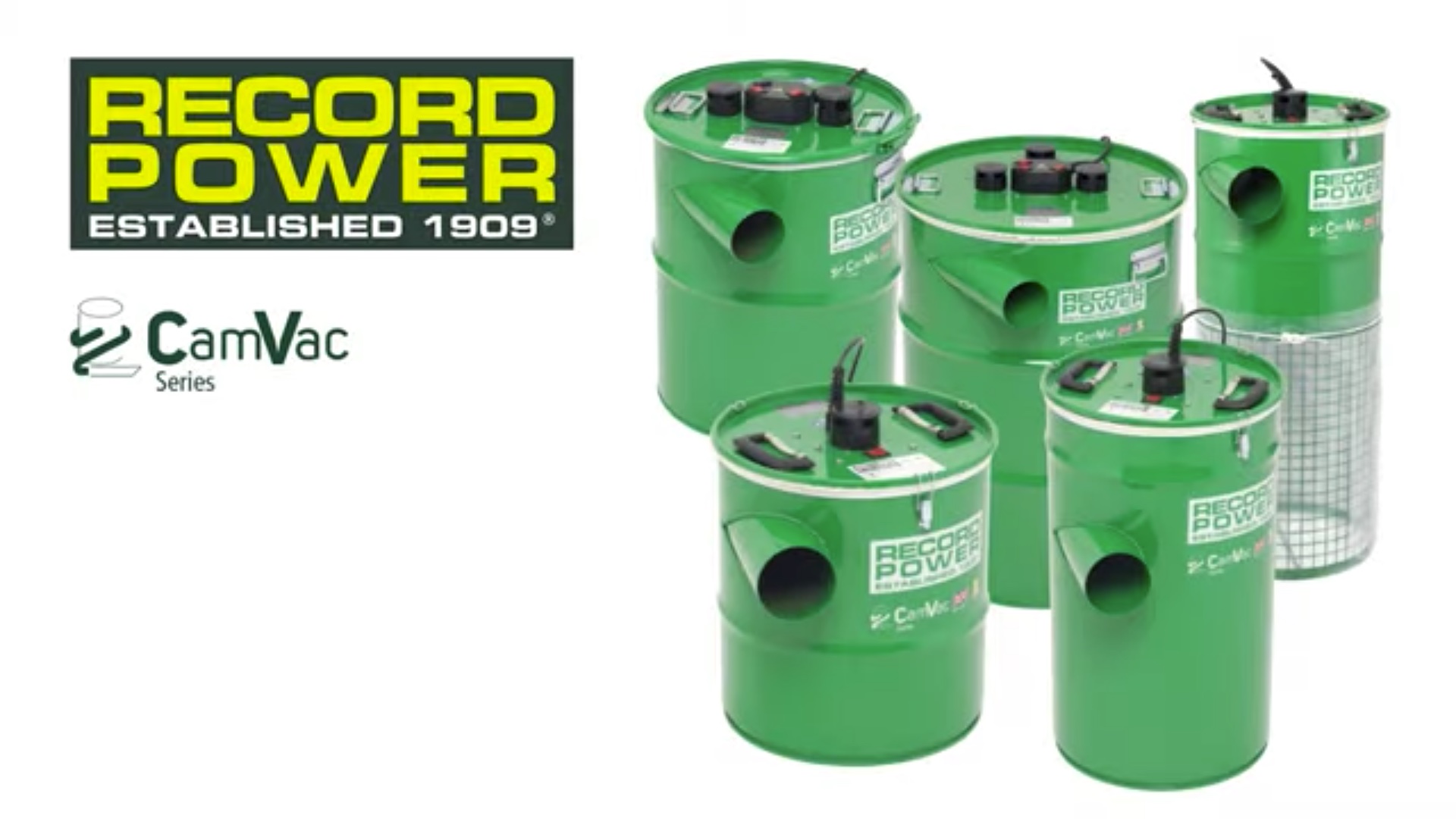
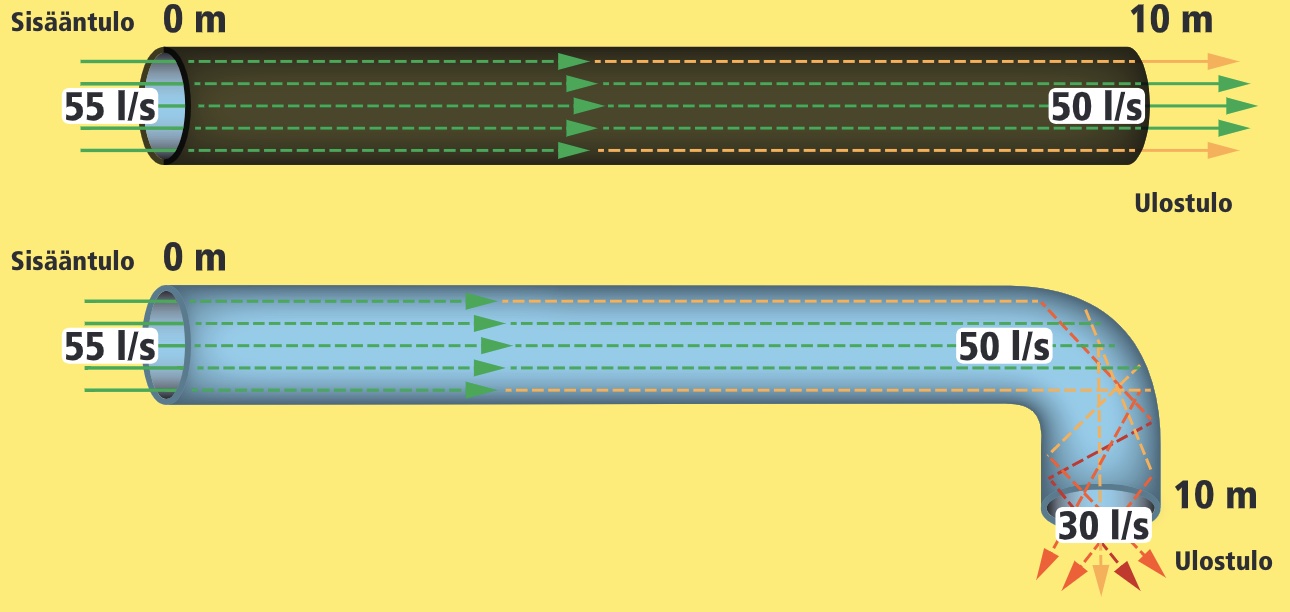
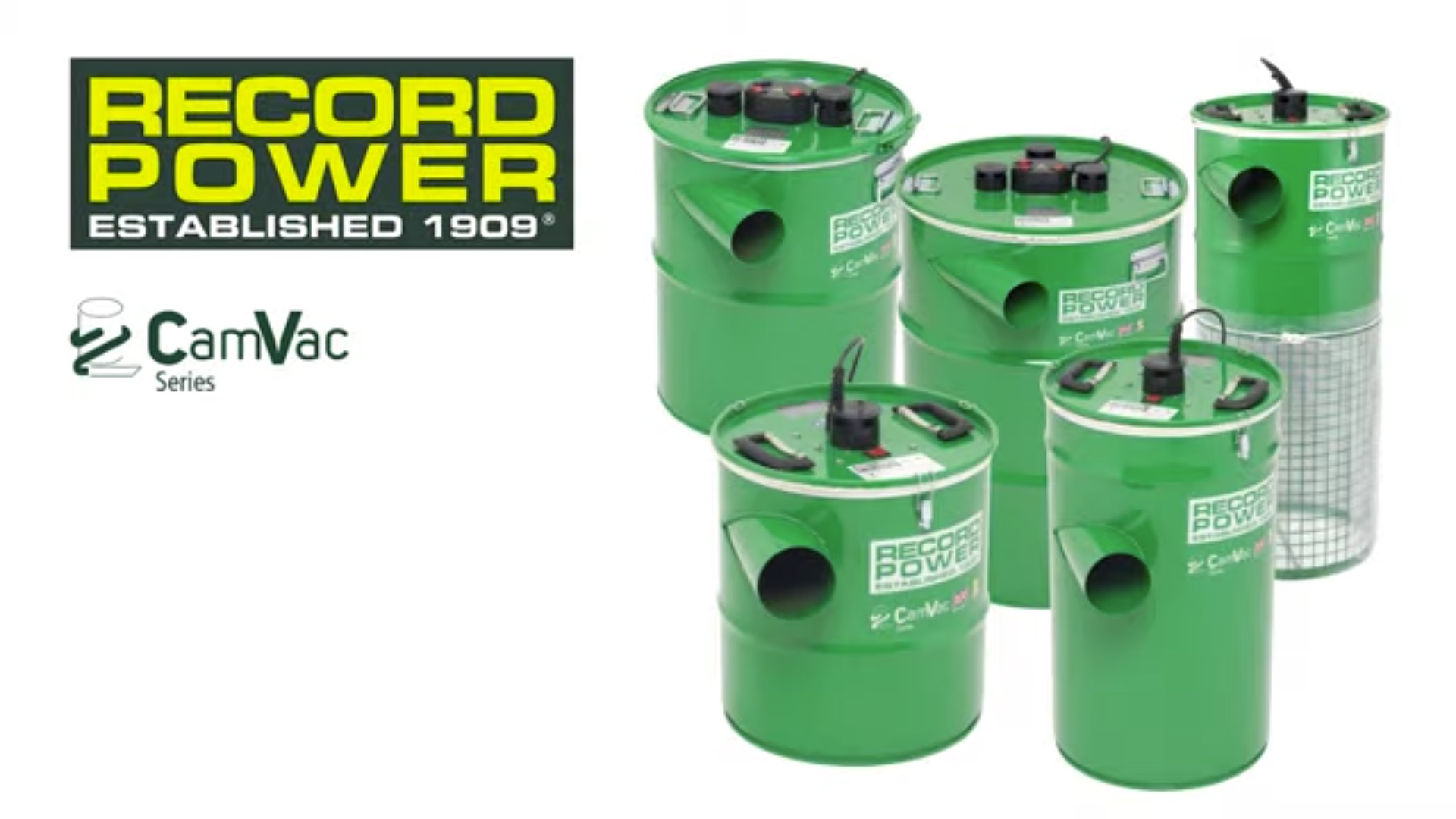
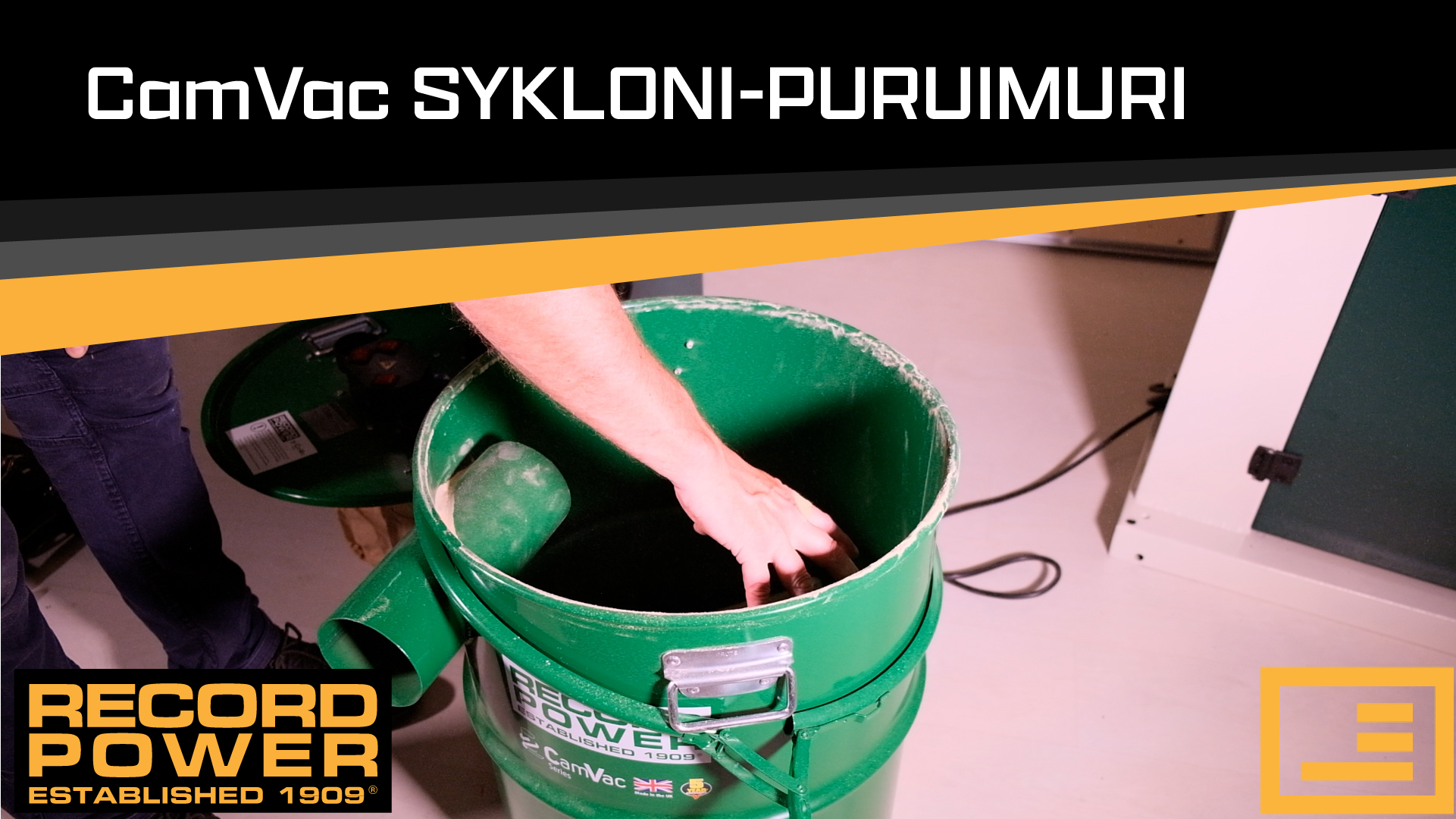
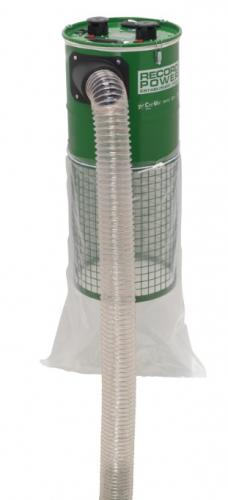
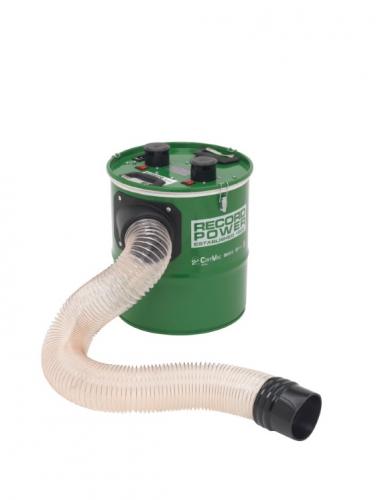
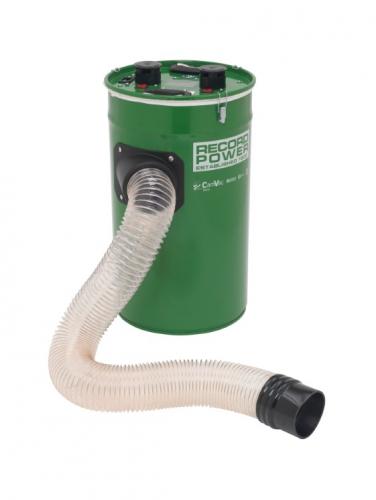
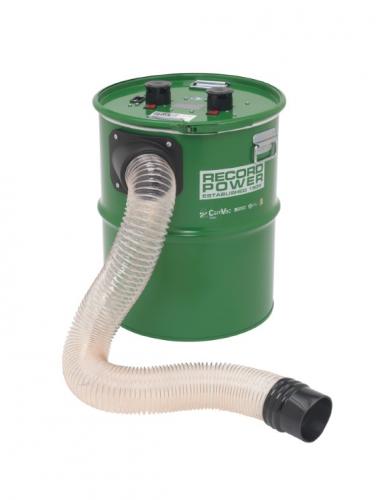
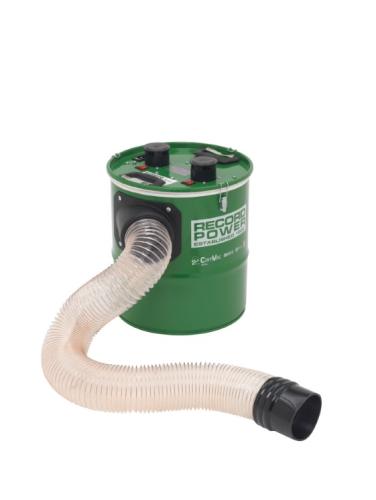
High Pressure, Low Volume extractors – also called turbine extractors (HPLV) – use strong static pressure to capture fine dust directly at source. They are the preferred choice for health-focused dust control because they maintain suction through fine filters and narrow hoses, the conditions needed to capture the particles most harmful to lungs. Browse our turbine extractors (HPLV) and the popular Record Power CamVac cyclone range.
Strengths: effective at capturing fine dust from sanding, routing, turning and sawing; maintain suction through fine filters and long hose runs; PM2.5-range filter efficiency, unlike bag extractors; compact design; modular motor options allow scaling for heavier use.
Limitations: lower raw airflow than HVLP bag extractors – may need multiple motors for sustained heavy chip collection; vacuum motors can run warm in continuous use and benefit from rest.
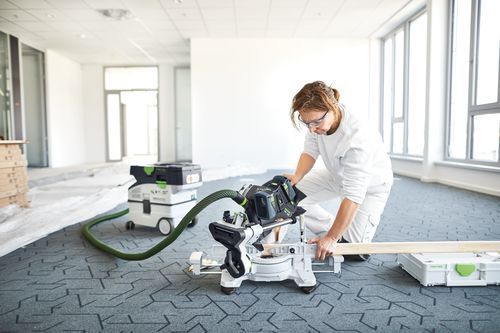
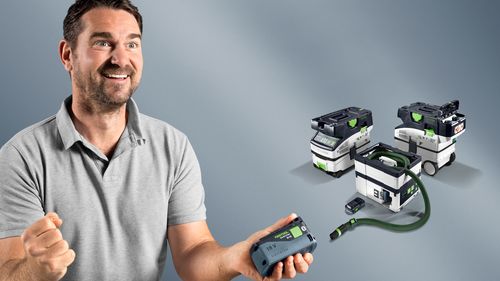
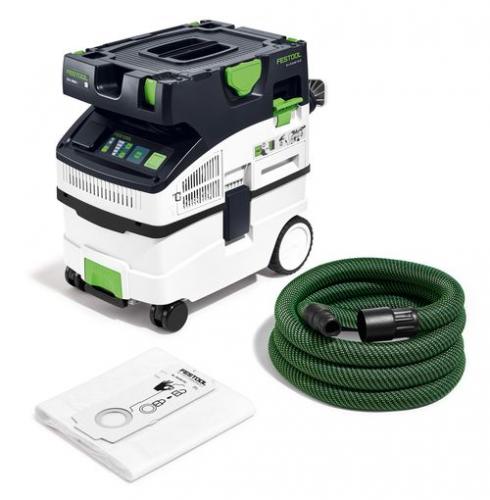
Compact HPLV units from premium power tool brands – power tool dust extractors – offer good fine dust filtration and are designed to integrate with specific tool ranges. For mobile and on-site use with handheld power tools they perform well. For general workshop use the limitations matter more: small filter and bin capacity, narrow native inlets (optimised for handheld tool ports, not the 100mm outlets on stationary machines) and single-motor designs that are not readily scalable.
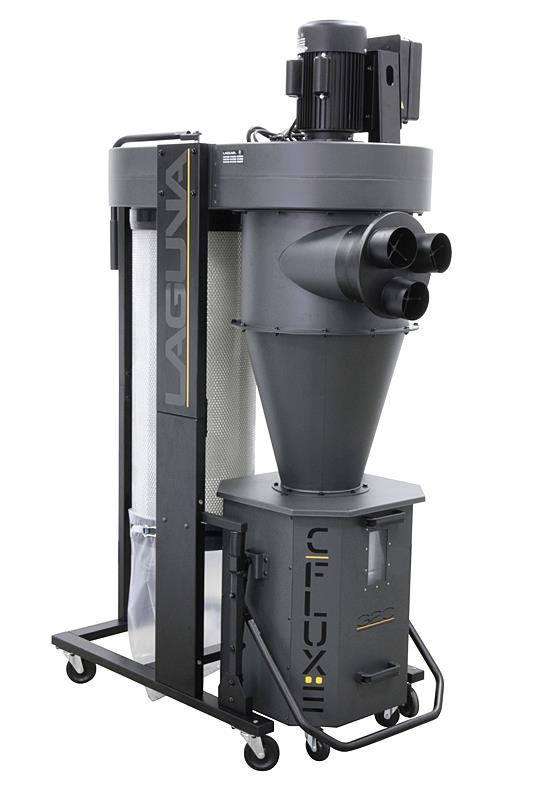
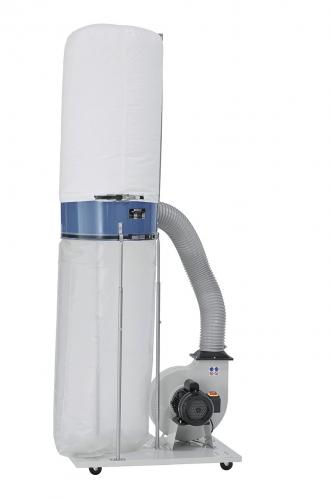
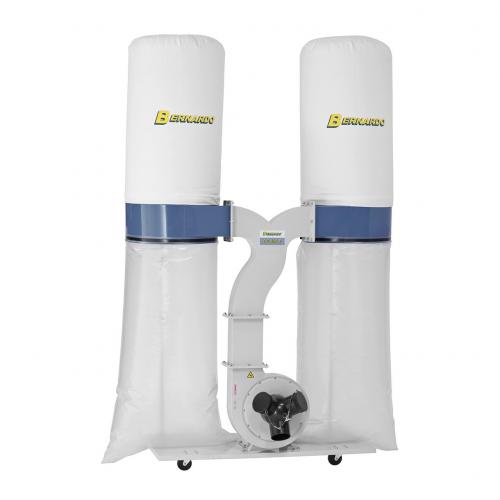
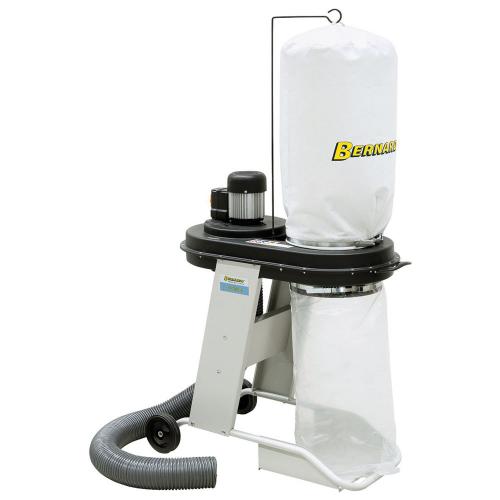
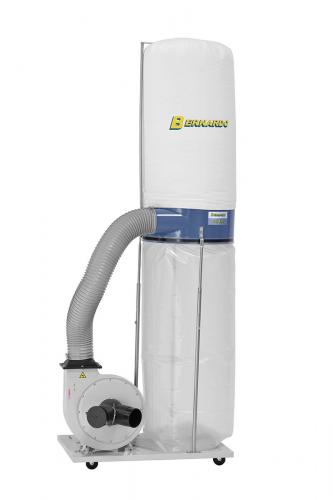
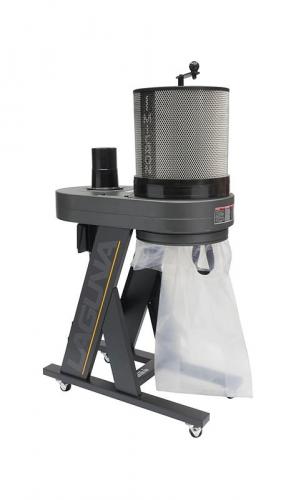
High Volume, Low Pressure extractors – bag extractors (HVLP), often called chip collectors or chip extractors – move large volumes of air at low pressure. This suits removing high volumes of chips from high-output machines such as planer-thicknessers, jointers and bandsaws. See our bag extractors and chip collectors (HVLP).
Strengths: effective for high-volume chip and shaving waste; wide-bore connections suit the large outlets on high-output machines; lower entry cost in basic configurations.
Limitations: standard bag and fabric filters do not capture fine dust in the PM2.5 range; cartridge filter upgrades improve threshold ratings but PM2.5 efficiency remains limited; low static pressure drops performance through fine filters; large footprint.
Ceiling- or wall-mounted ambient air filters cycle workshop air continuously and capture fine particles that remain airborne despite source extraction. They are particularly valuable for clearing the air after work has stopped – fine dust can stay suspended for hours. Choose an air filter rated for the PM2.5 range with enough airflow to cycle the workshop volume. Timer and remote control functions are genuinely useful. An ambient air filter complements source extraction but does not replace it and does not protect machines.
Personal protective equipment is your last line of defence – particularly valuable during sanding, when working with known hazardous or sensitising species, when cleaning machines and when emptying collected dust. See our respiratory and personal protection. FFP2 and FFP3 half-masks are an affordable way to get effective fine dust protection, and powered air-fed respirators add face and eye protection. However, a respirator protects only the wearer and only while worn, and does not reduce workshop dust.
| Dust type or risk | Primary solution | Supporting layer |
|---|---|---|
| Fine dust from sanding, routing, turning, sawing | Turbine extractor (HPLV) with PM2.5-efficient filter | FFP2/FFP3 respirator for high-risk operations |
| Chips from planers and jointers | Bag extractor / chip collector (HVLP), cartridge filter preferred | Ambient air filter to catch the fine fraction |
| Residual airborne fine dust | Ambient air filter – run during and after sessions | Source extraction reduces the load at source |
| Direct user protection in high-risk tasks | FFP2/FFP3 respirator or air-fed mask | Source extraction reduces concentration |
| Machine cleaning and dust disposal | FFP2/FFP3 respirator | Extractors with disposable bags help here |
The primary extractor is the backbone of any dust control strategy. Choosing the wrong type – or the right type with the wrong specification – is the most common and most consequential mistake in workshop dust control.
| Workshop type | Best primary option | Notes |
|---|---|---|
| Site or mobile use with handheld power tools | Compact power tool extractor | Optimised for portability and handheld tools |
| Dedicated planing and jointing – chips only | Bag extractor (HVLP) with cartridge filter | Cartridge filter better than bag filter |
| Mixed workshop: routers, saws, sanders | Turbine extractor (HPLV), e.g. CamVac | Fine dust control, adaptable, scalable |
| Growing workshop with varied needs | Modular turbine extractor (HPLV) | Flexible motor configuration, wide accessory range |
| Large workshop with high chip output and fine dust | Bag extractor (HVLP) + turbine extractor (HPLV) | Each handles what it does best |
Not necessarily. For high-volume chip collection from a wide planer, a chip collector remains appropriate. For fine dust from sanding, routing or turning, however, a bag extractor with a bag filter does not provide meaningful PM2.5 protection.
For many workshops, yes – especially if the work involves a mix of machine types. A well-specified turbine extractor (HPLV) with multiple motor options handles fine dust as well as moderate chip loads.
Choosing based on airflow figures without considering static pressure or filter efficiency. The second most common is buying a chip collector for fine dust work and expecting lung-level protection from it.
Every workshop is different, and the best extractor is the one that fits your tools, your space and your budget. Explore the full range: extractors and dust control at Nettiverstas.fi.

100% Trustworthy online store with history
Expert customer service
Fast deliveries
Large selection directly from stock
No middlemen - save on the price






 Suomeksi
 På Svenska