Login
Login
Shipping Country
WINTER CAMPAIGN - Selected Record Power machines and accessories with Special prices! - CHECK HERE
READ MORE
Login
Woodworking is a craft where the final result stands or falls on the quality of the finish. You can make the world's finest joints and use the most expensive oak, but if the sanding is rushed or done with the wrong tools, it shows immediately as soon as the finish is applied. For many, sanding is the stage they'd like to skip, but at Nettiverstas, we know that the right sander makes even this stage enjoyable – or at least considerably more tolerable ;)
There is more variety on the market than the law allows, and every machine type has its place in the workshop. In this article, we break down the three most common types of sanders so you don't have to guess which machine to use for your next project. Let's forget the marketing fluff and focus on what works in practice.
When it comes to raw power and rapid material removal, the belt sander is the undisputed king. This machine is your workshop "workhorse" that doesn't ask questions; it eats as much wood as you feed it. As the name suggests, a belt sander operates with a continuous, loop-shaped sanding belt that rotates between two rollers. Because the sanding motion is completely linear and the speed is high, it removes material much more efficiently than any other hand-held sander.
A belt sander is at its best when you have a large, flat surface that needs to be leveled or when you need to remove an old, thick layer of paint. For example, a solid wood plank table that is slightly uneven after gluing will be straightened much faster with a belt sander than by scrubbing with an orbital sander. It is also an excellent tool for squaring edges or removing a significant amount of material in a short time.
However, power has its downside. The belt sander is aggressive. If you lose focus or press too hard in one spot, it will dig a hole in the wood faster than you can say "mishap." It requires a steady hand and constant movement. Additionally, because the sanding motion is unidirectional, it easily leaves visible scratches if used against the grain. For this reason, a belt sander is almost always the first tool used, followed by finer sanding with other machines.
Also, remember that such a powerful sander produces a vast amount of dust. If you don't want your workshop covered in fine sawdust in ten minutes, a high-quality dust extractor is an essential partner for a belt sander. It keeps the work surface clean, preventing the belt from clogging and ensuring an even sanding finish.
If you could choose only one machine for your workshop, it would likely be a random orbital sander. It is the modern woodworker's multi-tool, combining two motions: rotation and a small, irregular vibration (orbital motion). This combination is brilliant as it prevents the traditional swirl marks that pure rotation would leave. The result is an extremely clean surface that is often ready for finishing as is.
The popularity of the random orbital sander is based on its ease of use. It doesn't bite into the wood as aggressively as a belt sander, so the risk of accidents is low. It can handle both rougher sanding (provided you use the right paper) and delicate finishing. The machine's round base also makes it excellent for sanding curved surfaces and shapes.
When talking about top-tier orbital sanders, Festool is a brand that cannot be ignored. Their machines are known for their ergonomics, vibration dampening, and above all, perfect dust extraction. When vibration is minimized, you can sand longer without your hands going numb – and we all know that quality suffers when the maker starts to tire ;)
The weakness of the random orbital sander is its shape. With a round base, it's impossible to get right into corners or sharp internal angles. If you're building a shelving unit or a chest of drawers, the orbital sander will leave the corners untouched, and that's when you need a different kind of assistant.
The finishing sander (also known as a sheet sander or orbital sander) is the tool you bring out when you want to take a surface to its final polish. Its base is usually square or rectangular, and it moves with a very small, fast vibrating motion. Unlike the random orbital sander, the base of a finishing sander does not rotate.
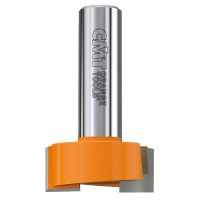
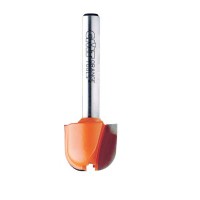
Why choose a finishing sander? Firstly, thanks to its rectangular shape, it is the only true sander for working in corners and edges. If you have just used high-quality router bits to shape the edges of a piece, a finishing sander allows you to tidy up the corners neatly without fear of a round disk "wandering" and ruining the shape.
A finishing sander is also excellent for fine-sanding large, flat surfaces before waxing or lacquering. Because its removal rate is low, it is very gentle. It's hard to cause damage even if you press a bit harder. There are also smaller "detail sanders" or delta sanders on the market, whose triangular base is designed specifically for tight spaces and complex details.
While a finishing sander is slower than an orbital sander, the finish it leaves is often the most even. Professionals often use it as a final step to remove even the most minimal swirl marks left by an orbital sander. It is a precision tool without which the finish often remains halfway done.
The sanding process is a continuum, and you'll rarely manage the whole journey with just one machine if a flawless result is the goal. Here is a rule of thumb for proceeding with your project:
The choice is also influenced by the size of the project. For a small jewelry box, a belt sander is like shooting a fly with a cannon – an orbital sander and hand sanding are perfectly sufficient. On the other hand, sanding a ten-meter deck with a finishing sander is a sure way to earn yourself tendonitis and grey hair. So, always choose your sander based on the size of the target and the required precision.
Don't forget ergonomics. If you sand a lot, the machine's weight, handle design, and vibration play a significant role. Professional-grade machines might cost more, but they save the user and last for years. In Nettiverstas style: we don't sell junk, but tools that actually get the job done ;)
The machine is only half the truth; the other half is what you put between the machine and the wood. Choosing the right sandpaper is critical for the sander to work as intended. The most important thing to remember is the sanding steps. Never skip more than one grit level at a time. If you move directly from P80 grit to P240, the finer paper won't be able to sand away the deep scratches left by the coarse paper. Those scratches will mock you as soon as you apply the first layer of oil to the surface.
Most common grits and their use:
The quality of the sandpaper also matters. Cheap hardware store papers clog quickly and wear out in an instant. High-quality sanding nets or professional-grade papers might cost a bit more, but they cut better and last manifold longer. Sanding nets, in particular, are popular nowadays because their dust extraction capability is superior to traditional perforated paper.
Finally, the most important reminder: let the machine do the work. Don't press the machine against the wood with gritted teeth. Excessive pressure only heats up the paper and the wood, clogs the abrasive grains, and might even burn marks into the wood surface. Trust that a proper sander and sharp paper will do the job, as long as you guide the machine calmly across the surface.
Sanding is skill, patience, and the right tools. When these three meet, the result is something you'll be proud to show the neighbor – or at least be satisfied with your own handiwork. We at Nettiverstas are here to ensure you have exactly the right gear to make the wood bend to your will ;)
100% Trustworthy online store with history
Expert customer service
Fast deliveries
Large selection directly from stock
No middlemen - save on the price






 Suomeksi
 På Svenska